That magical number refers to my having seen 10,000 individual movies. The oldest being 1919’s The Cabinet of Dr. Caligari to the recently released 2026 action flick, The Wrecking Crew.
Is that 10,000 an exact number? Probably not as I can’t recount every movie I may have seen in my early years accompanied by family members gathered around the only TV in the house and but a handful of channels to choose from. Aside from cartoons in the morning it was my parents who dictated what was on the “boob tune” in those days.
Somewhere around the age of 10 or 11 I got myself a notebook and began to record the films I knew I had already seen and dutifully recorded each and every new one. From late shows on City TV out of Toronto to the local theater houses, the numbers and years have accumulated to the point I’m in my 50’s and on the verge of seeing my 10.000th film.
Can I remember each one of them? Hardly, that’s what computers are for. To keep my list on record. Still, anyone who knows me is quite surprised at my recall when it comes to titles, actors and directors.
Upon watching 1969’s Once You Kiss a Stranger I’d reached 9990 films seen. I put the brakes on any new to me titles and mulled over a 10 film countdown to the magical 10,000. How do I select a movie for the big occasion? Should I finally watch some titles I’m embarrassed to say I’ve never seen? No, they shall remain unnamed but how about Academy Award winning Best Pictures I’ve missed along the way for any number of reasons?
Yeah, that works.
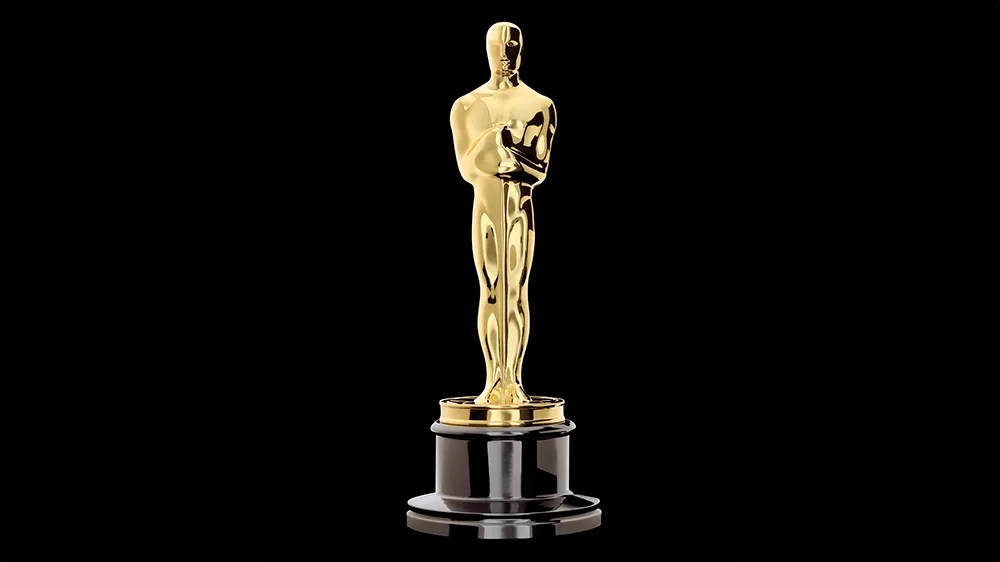
Sticking to the principle that I spotlight films released prior to the year 2000 here at Mike’s Take I looked at the Best Picture winners running from 1927 thru to 1999. Turns out there are 28 Oscar winners I had yet to see. I settled on 10 titles in part because they were in my collection and began my countdown. As for the order, I had no real direction in mind so the films were selected based on what I was feeling like or maybe the running time that I could shoehorn in to my schedule and lastly what my wife felt like viewing alongside of me. She sat in on two of them. Finally these selections also afforded me the opportunity to see many Oscar winning performances as well.
Here we go accompanied by a comment or two ……
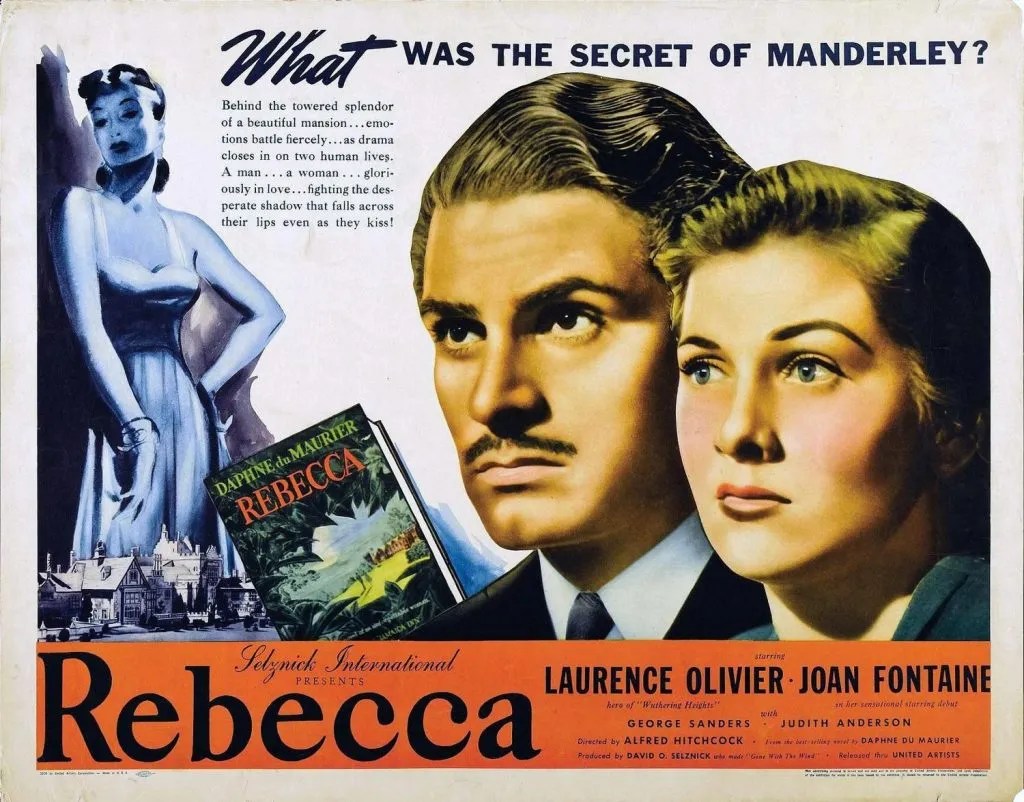
Number 9991. Best Picture of 1940 – Rebecca. Just another winner from the Master, Alfred Hitchcock and an Oscar winning performance from Joan Fontaine. She’s accompanied by Laurence Oliver in this splendid murder mystery and no I didn’t spot Hitch so I had to look it up. I missed him outside of the phone booth.
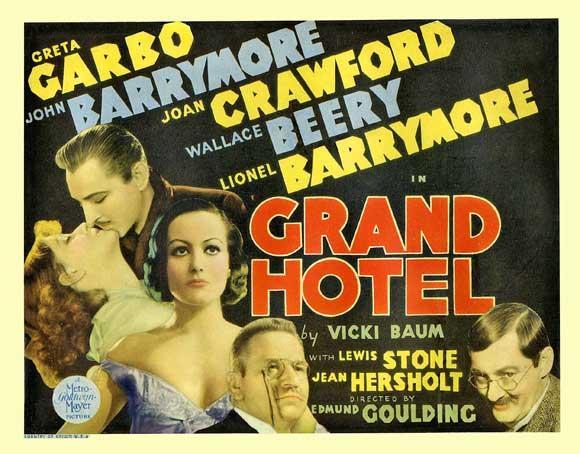
Number 9992. Best Picture of 1932 – Grand Hotel. I’ve been meaning to catch up with this MGM extravaganza for a while now. Just so I can gaze at all the “stars”. Greta Garbo, John and Lionel Barrymore, Joan Crawford, Wallace Beery and Lewis Stone have all checked in but not everyone will be checking out in the customary manner.
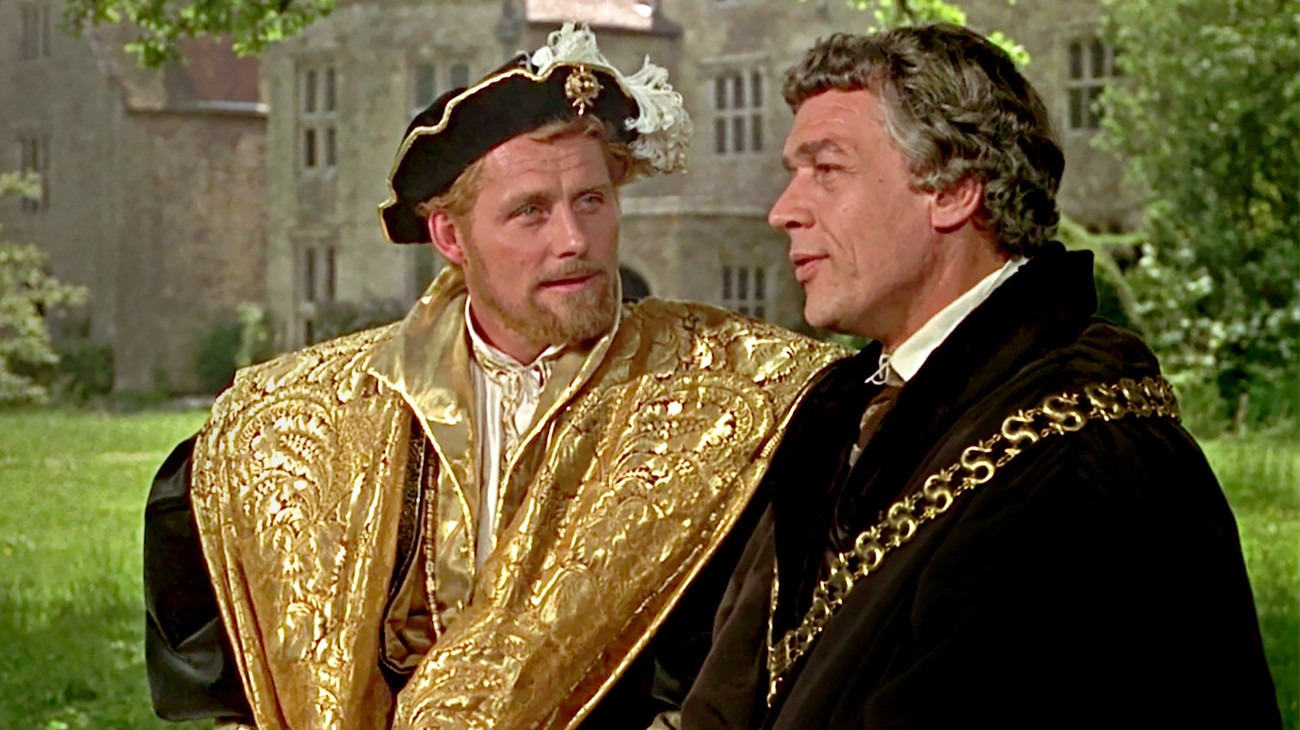
Number 9993. Best Picture of 1966 – A Man For All Seasons. Excellent historical drama with an Oscar winning Paul Scofield as Sir Thomas More refusing to give his blessing to King Henry VIII’s latest marriage. A great turn by Robert Shaw as King Henry. Orson Welles, Leo McKern, Nigel Davenport, Susannah York, Wendy Hiller and a young John Hurt reminding me of just how long his career lasted. Taking home the Oscar for Best Director was Fred Zinnemann.
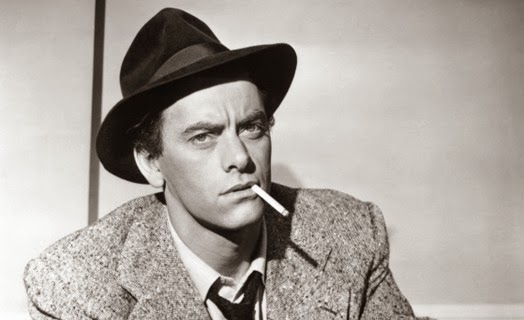
Number 9994. Best Picture of 1949 – All the King’s Men. Broderick Crawford in his most celebrated role and one that scored him an Oscar. I’ve heard it’s a thinly veiled story of a real life political figure where Crawford rises to the office of a state governor bringing along corruptness every step of the way to achieve what he wants and the lengths he’s willing to go to stay in power. I’ll have to check out the remake sometime that starred Sean Penn in the Crawford role. Solid role here for Canada’s own John Ireland as the newspaperman covering Crawford’s rise who himself gets swept into the depths of corruption along the way.
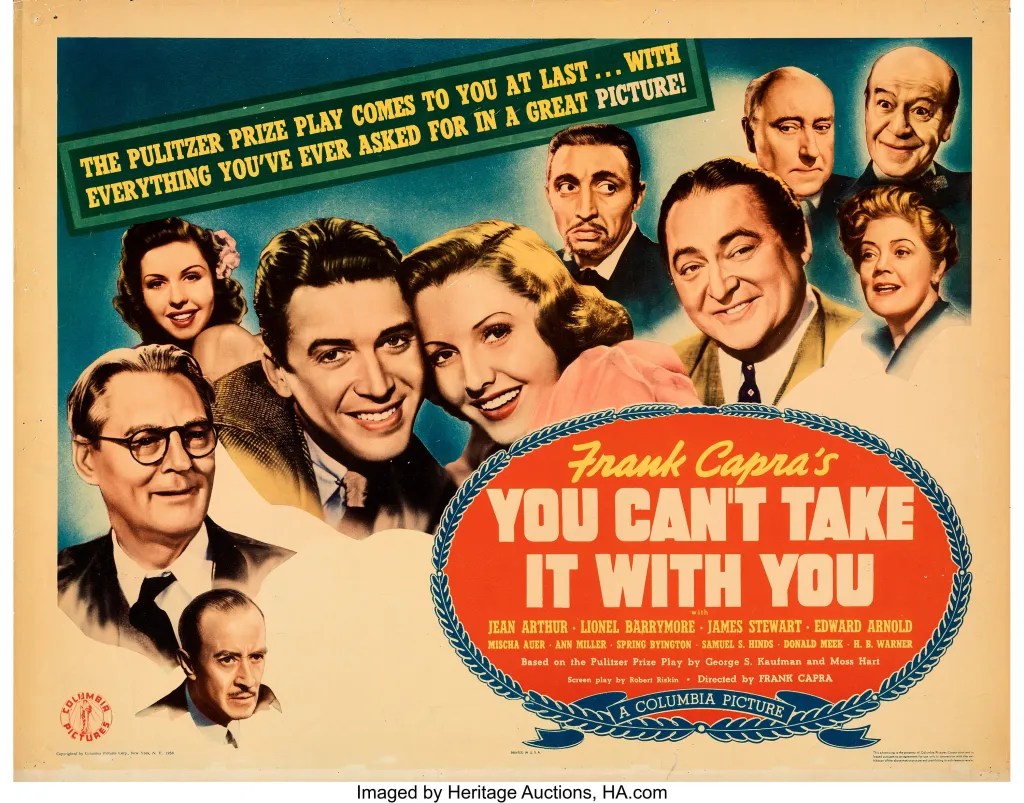
Number 9995. Best Picture of 1938 – You Can’t Take It With You. Knowing this is a Frank Capra film that stars Lionel Barrymore and James Stewart it’s hard not to compare it to 1946’s It’s a Wonderful Life. And there are similarities. Most notably in the Edward Arnold character when held up against Barrymore’s Mr. Potter in the latter film. Here it’s a whimsical tale with Barrymore shining as a genteel father to Jean Arthur and a host of characters who have taken up residence in his household. Drama inserts itself when Arnold as the “heavy” wants the Barrymore property for a factory location only to find out his son Jimmy has his heart set on marrying Miss Jean. Funny, charming and again, it’s got some strong similarities to the far more popular film of ’46. Had I been a movie going youngster in 1938 I’d have had one huge crush on Jean Arthur. Heck, what am I saying. I do anyway.
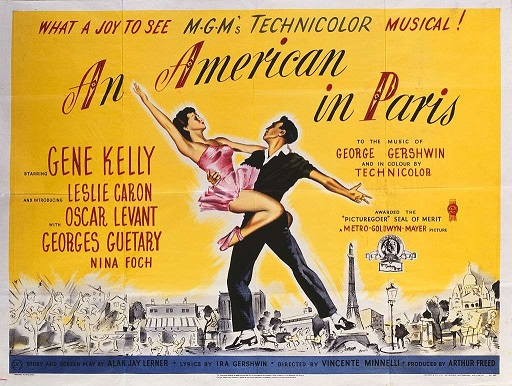
Number 9996. Best Picture of 1951 – An American in Paris. Gene Kelly and Leslie Caron accompanied by a splendid palette of colors captured on camera by director Vincente Minnelli. For me it’s the look of the film that shines. The plot less so but then I’ve never been a big fan of musicals though I do find myself enjoying them once I sit down and press play. Best Picture of 1951? Could be but that’s always subjective. A Streetcar Named Desire was also nominated and The African Queen wasn’t. Just saying.
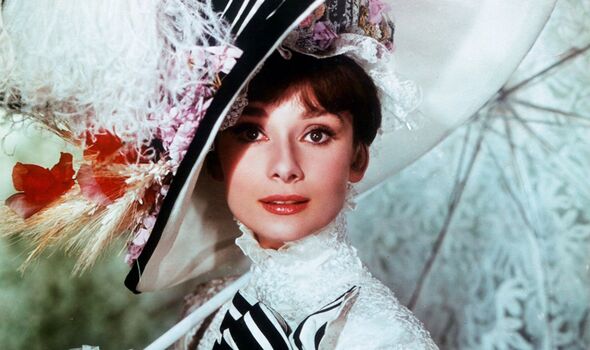
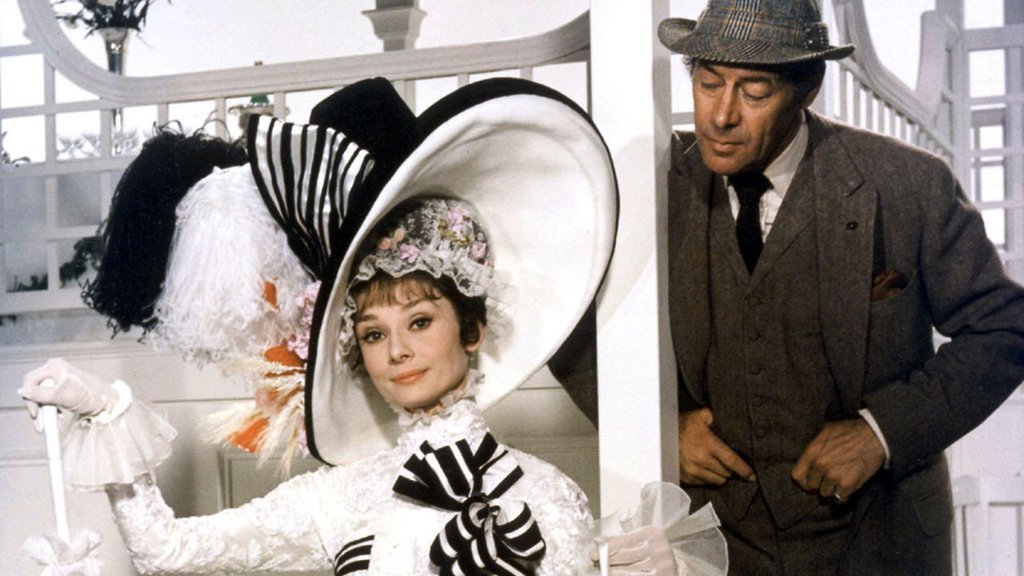
Number 9997. Best Picture of 1964 – My Fair Lady. Another title I’ve been meaning to catch up with but that 3 hour running time always seemed to put me off. Not more than 15 minutes into this film Audrey Hepburn has me captivated as the girl from the streets with social skills that are not exactly prepped for high society. Enter Rex Harrison who is going set her straight on social graces that are sure to get Miss Audrey hobnobbing with the upper crust of Victorian England. Hey, now I know where the line “The rain in Spain stays mainly in the plain.” comes from. A bit overlong for my money but then how am I to argue with George Cukor. After all, he did win an Oscar for Best Direction as did Harrison for Best Actor. Shockingly there was not even a nomination for Audrey and I couldn’t help but wonder if the fact that her singing has been dubbed led to her being ignored by the Academy?
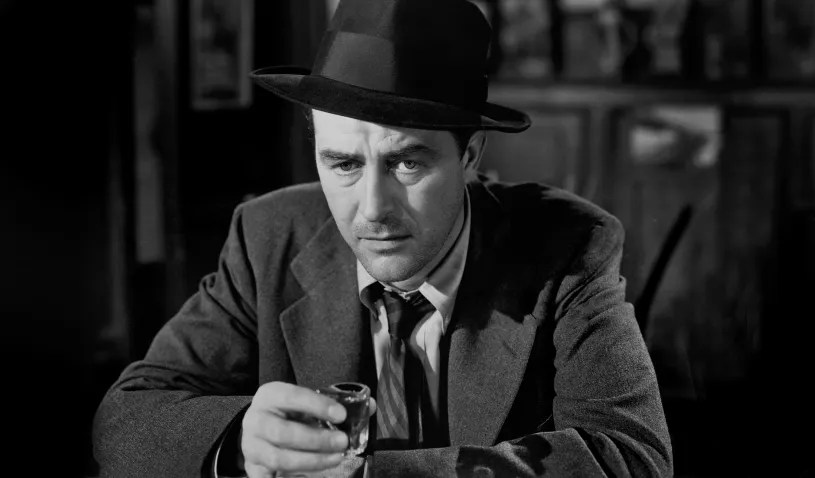
Number 9998. Best Picture of 1945 – The Lost Weekend. Billy Wilder scores another success and lands Ray Milland his only Oscar playing against type at this stage of his career as the binging alcoholic who can’t stay sober despite the love of a good woman played by Jane Wyman. This proved to be Milland’s only Oscar nomination and that’s all he needed to land the prize unlike some who score multiple nods only to never win. Richard Burton might be the best example going 0 for 7.
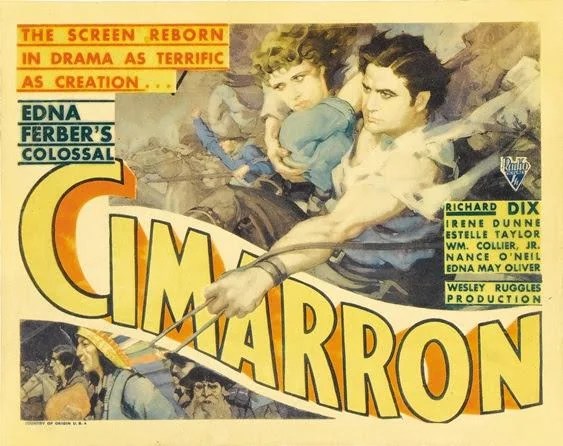
Number 9999. Best Picture of 1931 – Cimarron. Sorry, this one hasn’t aged well and that probably could have been said about five years after it’s release. Richard Dix and Irene Dunne star in this western frontier tale that does have a great opening. The likes of which we’ll not likely see again on camera unless of course it’s done with the dreaded CGI. It’s a land rush with an incredible amount of extras on horses, wagons and even a bicycle rushing to lay claim to open lands. Anthony Mann directed a remake in 1960 which wasn’t all that successful despite a big budget and Glenn Ford taking lead. As for the year 1931, I’d rather rewatch Frankenstein, Dracula, The Public Enemy or M.
No I didn’t watch 10 consecutive Best Picture winners. I broke up the countdown with a few re-watches that included Let’s Scare Jessica To Death (1973), The Black Shield of Falworth (1954), Blue Chips (1994), The Wickerman (1973), The Sheepman (1958), Theater of Blood (1973) and Houseboat (1958) among others.
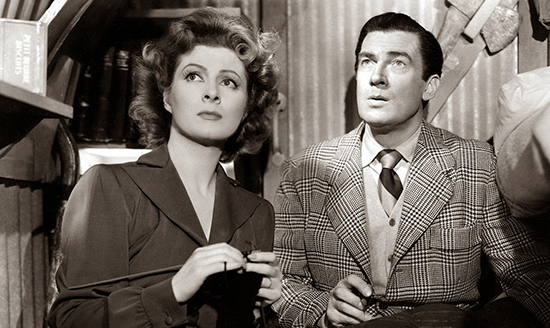
Coming in at number 10,000 and causing me to reach for a tissue was the Best Picture winner for 1942, Miss Miniver. Winning an Oscar for her performance in the title role is Greer Garson playing opposite Walter Pidgeon. The couple have a son who is off to fight the Nazi’s when England falls under attack in the aftermath of Dunkirk. Before the boy goes off to war he marries the girl next door, Teresa Wright who had the market cornered on these roles during this part of her career. A wonderful drama is captured here by director William Wyler in a film that does a fine job of NOT turning itself into a propaganda film which was fairly common during the years of WW2.
So which film did I think was THE best picture of the ten? Tough call and I can’t single out just one but can easily see myself re-watching A Man For All Seasons, Rebecca, Mrs. Miniver and Grand Hotel perhaps a bit faster than the other six on the list. How many of these ten titles have you seen?
In closing why not follow me on Letterboxd with the handle MikesTake as I begin the journey to 20,000 titles. I’ll be sure to follow you as well.
 Mike's Take On the Movies
Great list, and great choices on your road to 10,000, Mike! I am about 5/10 on these, and you may have inspired me to watch the other five when they are on TCM. One minor correction: your first reference to Mrs. Miniver refers to it as “Miss Miniver” — I’m pretty sure she was married to Walter Pidgeon! Looking forward to more interesting posts from you in the future!