
I don’t think it’s a stretch to suggest most if not all classic film fans and even a few contemporary ones know exactly who Bette Davis is. With her clipped way of delivering dialogue coupled with her “Bette Davis Eyes” she’s an icon of cinema. Rightly so. She’s one of the all time greats among actresses with eleven Academy Award nominations spanning four decades and two Oscars for Best Actress to her name. One for 1935’s Dangerous and a second for 1938’s Jezebel. I’m a fan with 83 of her film’s currently in my disc collection.
On the flip side, George Brent has always flown under the radar for me. I suspect I’m not alone in that statement. What I mean to say is if you asked me who is in the Fighting 69th (1940) I’d answer James Cagney and Pat O’Brien. Who starred in a Racket Busters (1938)? Bogie of course. Even when asked about 38’s Jezebel, I’ll name Henry Fonda as Bette’s costar. Yes Brent was in all three and host of other Warner Bros. flicks from the thirties and forties including loan outs to the other major studios. I don’t believe Brent has a definitive or defining role looking back. Yet while reading Scott O’Brien’s biography of Brent that I recently picked up I was reminded that he costarred with Bette Davis in eleven films and even romanced her for a while. A quick check of my catalogue tells me I have 50 of his films here in the movie room.
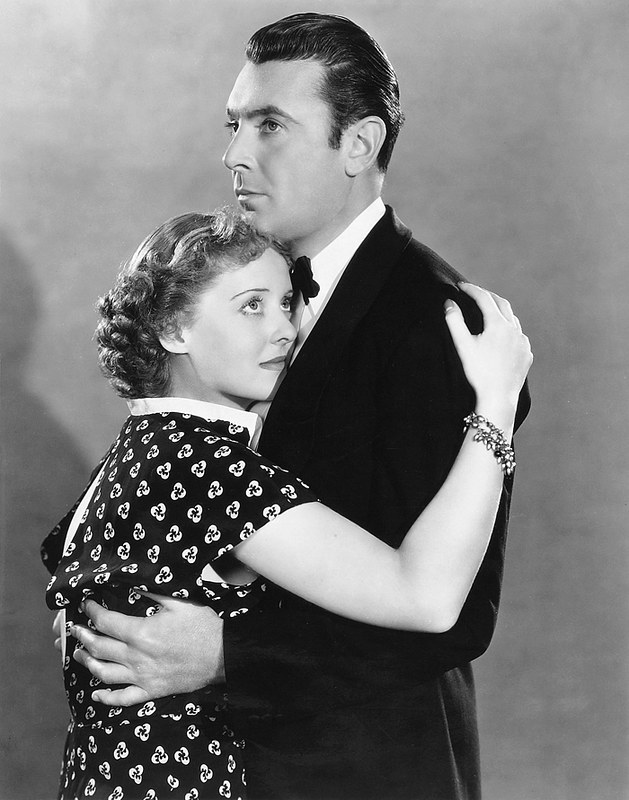
Davis starred opposite most heavyweights from the Golden Era. Claude Rains, Bogie, Cagney, Henreid, Leslie Howard, Fonda, Eddie G and of course Errol Flynn. Not to be outdone, Brent appeared opposite the likes of Stanwyck, Lamarr, Kay Francis, two ex-wives Ruth Chatterton and Ann Sheridan, Garbo, de Havilland, Loy, Colbert and Fontaine. Pretty impressive roll call of Hollywood beauties.
Still, having seen many of the films featuring both stars it took this bio to remind me they appeared eleven times together on camera.
The pair were just getting started in movies once the thirties hit. Already established at the box-office, Barbara Stanwyck played lead in 1932’s So Big from director William A. Wellman with relative newcomers Brent and Davis getting some screen time.

Doubling up in 1932 the Davis/Brent team carried on in secondary status next to Ruth Chatterton who scored above the title billing in The Rich Are Always With Us. Bette, George, Ruth with John Miljan and Adrienne Dore.
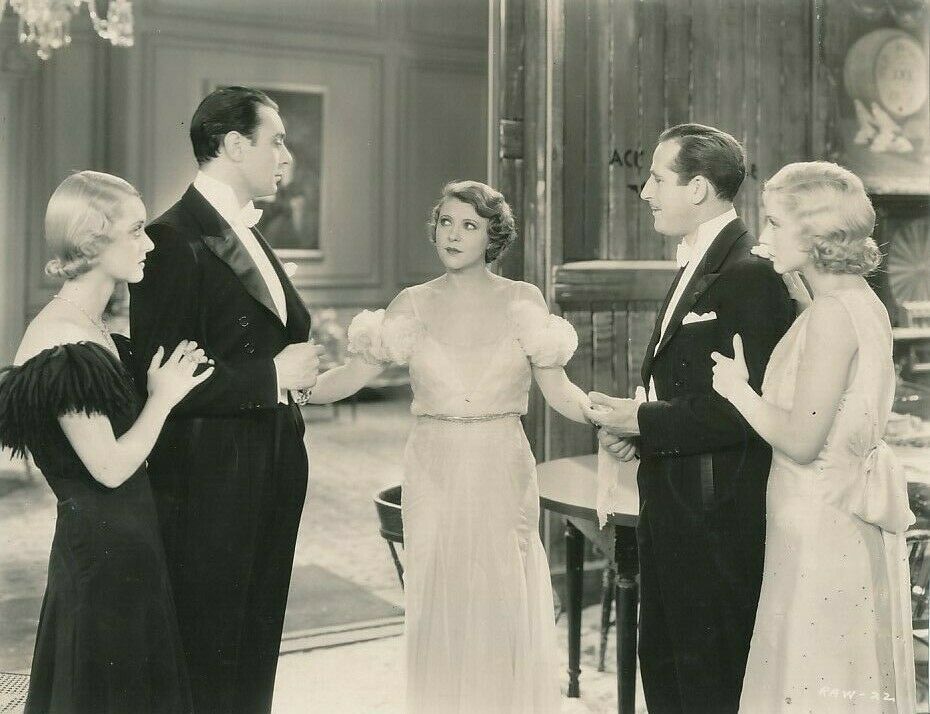
Moving up the marquee, George and Bette headlined 1934’s Housewife alongside Ann Dvorak. Just who is George going to be holding at the end of the film? ” Well, I’ve done all right. I suddenly found out I had some brains and decided to use them.”
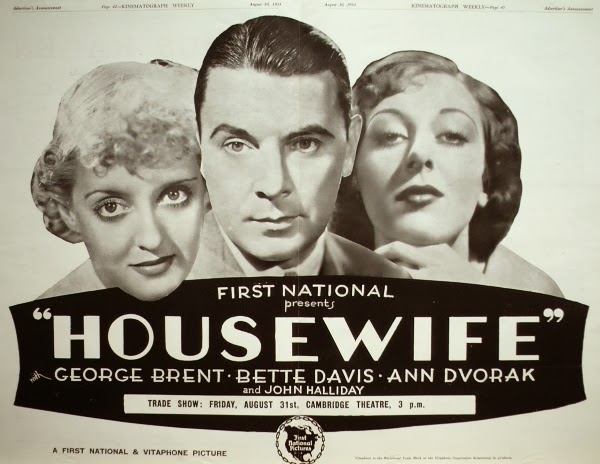
1935’s Front Page Woman picks up the pace with a classic 1930’s set up under the guidance of director Michael Curtiz. Brent and Davis are opposing newshounds for competing newspapers. And yes they’re in love. Who’s going to get the big story first? “You make me so mad I could… well, I could spit!”
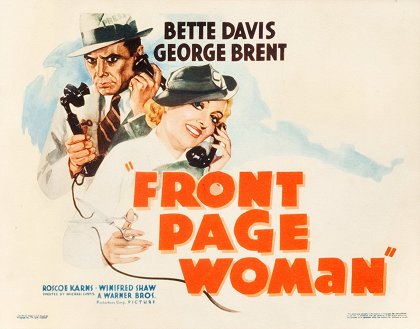
It was back-to-back for the pair with another 1935 release, Special Agent. This time out Bette is cooking the books for racketeer Ricardo Cortez. Once again Brent is playing a newshound who is courting Miss Bette and has Cortez’s trust at building up his image in the press as a straight businessman. But then again, what’s this movie called? “An old-fashioned is nothing but a cross between a fruit salad and a slug of whiskey.”

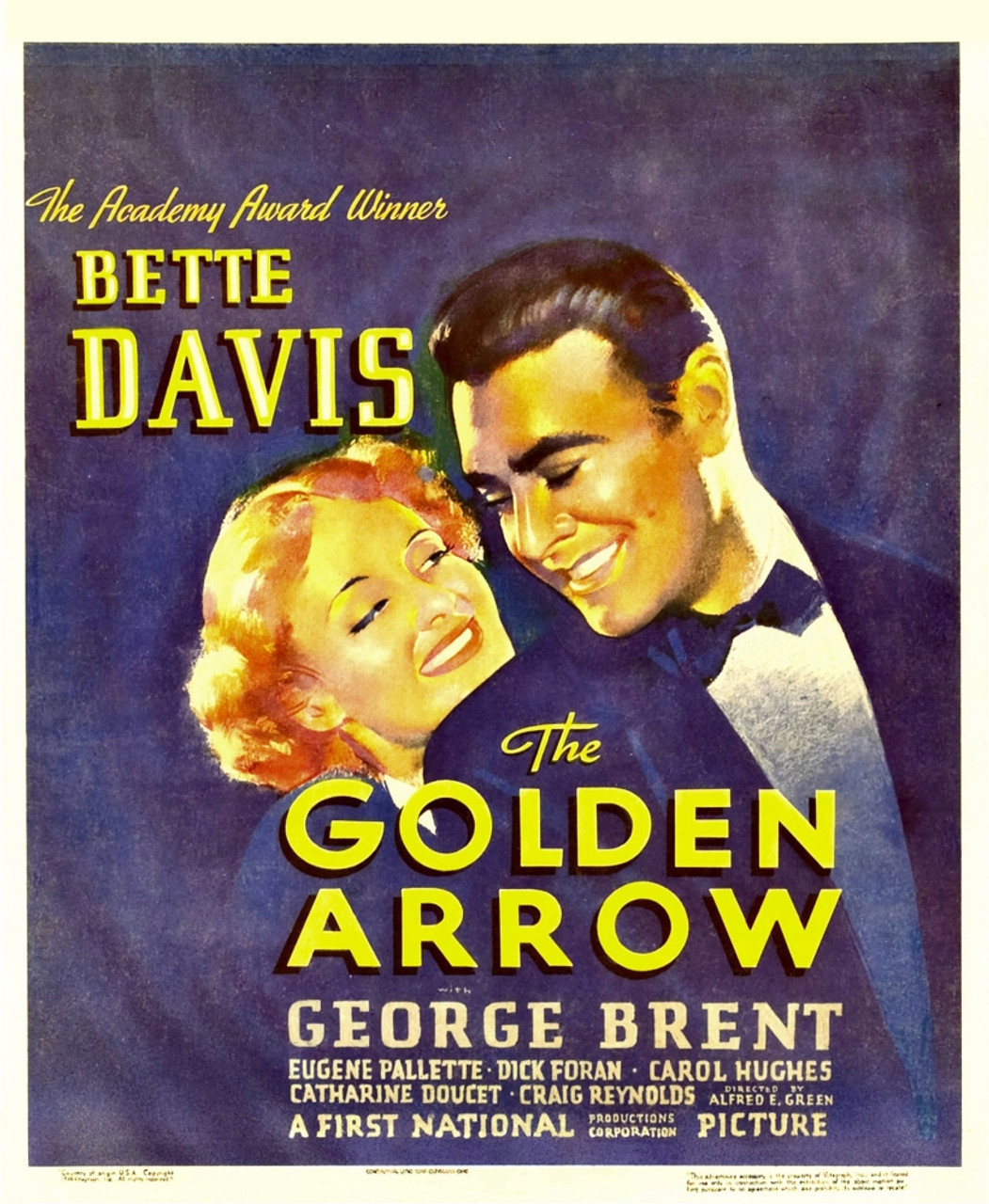
Time for a screwball comedy 1936 style. Bette is the rich heiress and George is ….. a newspaper man. What did you expect? The fact is, Bette is tired of fortune hunters trying to wed her for her supposed wealth so why not propose to a reporter with a set of principles to keep the hounds from her door? Strictly a business arrangement. Sounds simple but don’t be surprised at the twists and turns ahead. Might there be love in the cards for our two leads? With a recent Oscar to her name you’ll note the billing.
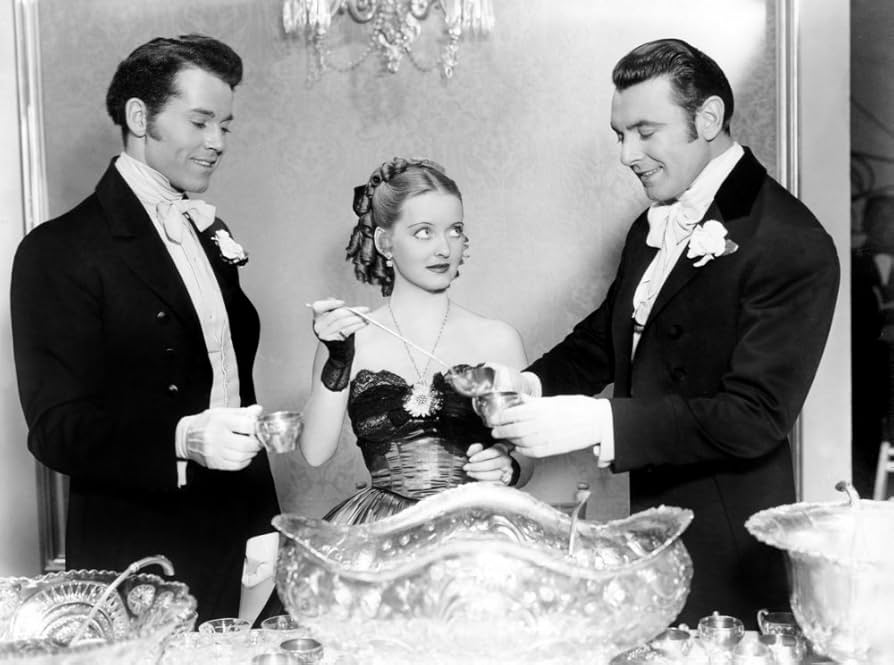
It’s a first class 1938 William Wyler film that handed Bette the plum role of a “Jezebel” for which she won her second Oscar. As for Mr. Brent, he moved down the cast list to 3rd billing behind Henry Fonda. The pair both vying for the affections of those “Bette Davis Eyes.” ” I’m askin’ for the chance to prove I can be brave and strong and unselfish.”
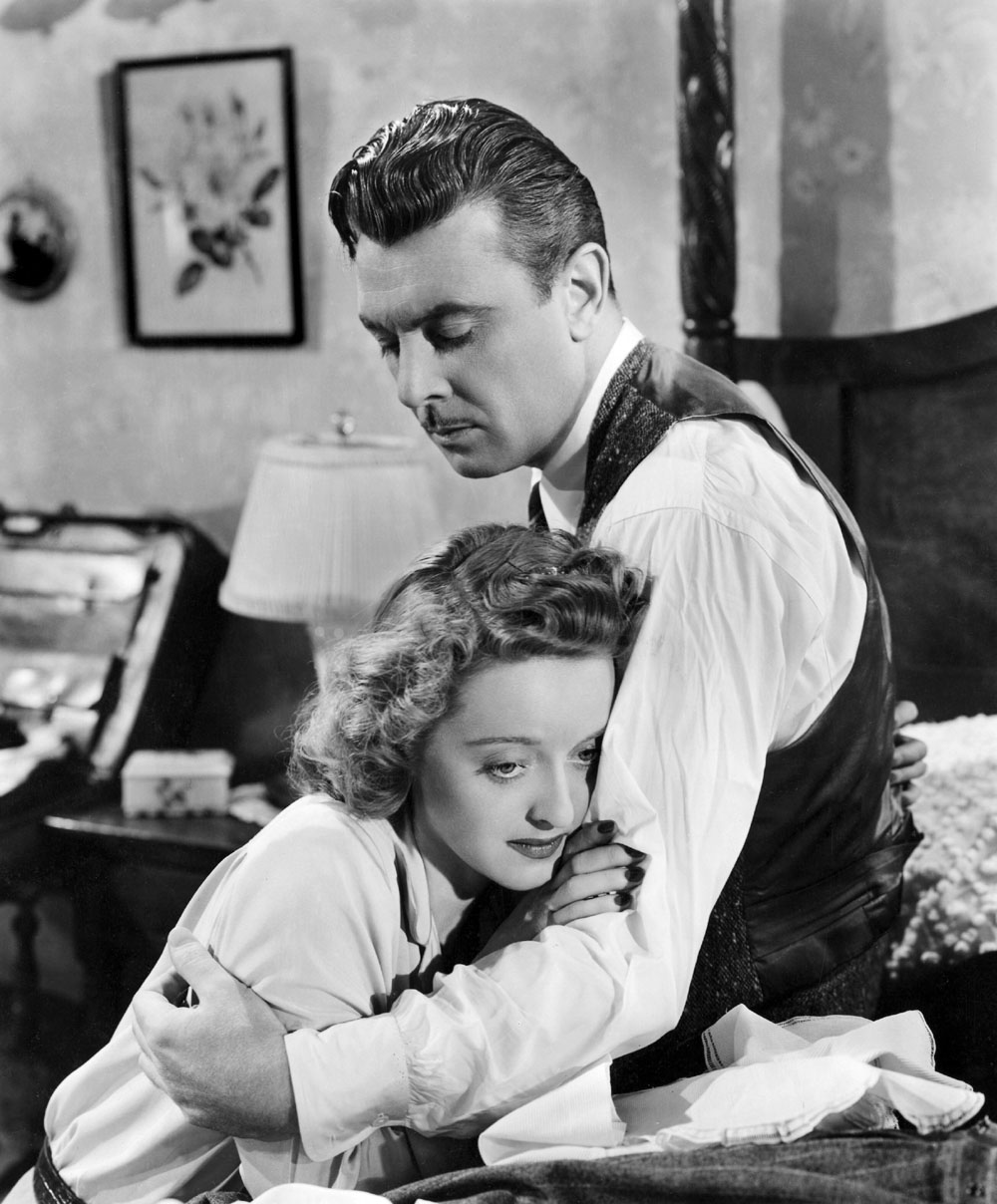
I’d suggest that 1939’s Dark Victory is “The Big One” that paired Davis and Brent. It’s the classic weeper that I won’t play spoiler to just in case you’ve yet to see it. George has his Gable like moustache working for him this time out while the likes of Bogie and Ronald Reagan also turning up. ’39 was a tough year to score an Oscar thanks to Gone With the Wind and if it wasn’t for Vivien Leigh I’m quite sure Bette would have claimed her third in a five year span. “Nothing can hurt us now. What we have can’t be destroyed. That’s our victory – our victory over the dark. It is a victory because we’re not afraid.”
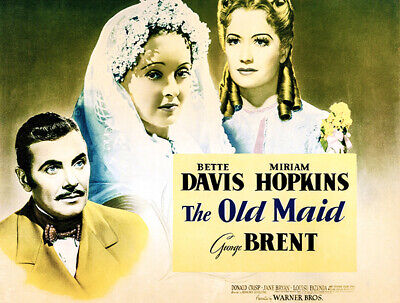
George served as window dressing to what was really going on in 1939’s The Old Maid, the sparring match between Bette Davis vs. Miriam Hopkins refereed by producer Hal Wallis. ” A woman never stops thinking of the man she loves. She thinks of him for years in all sorts of unconscious ways. In thinking of all sorts of things, a sunset, an old song, a cameo on a chain.”
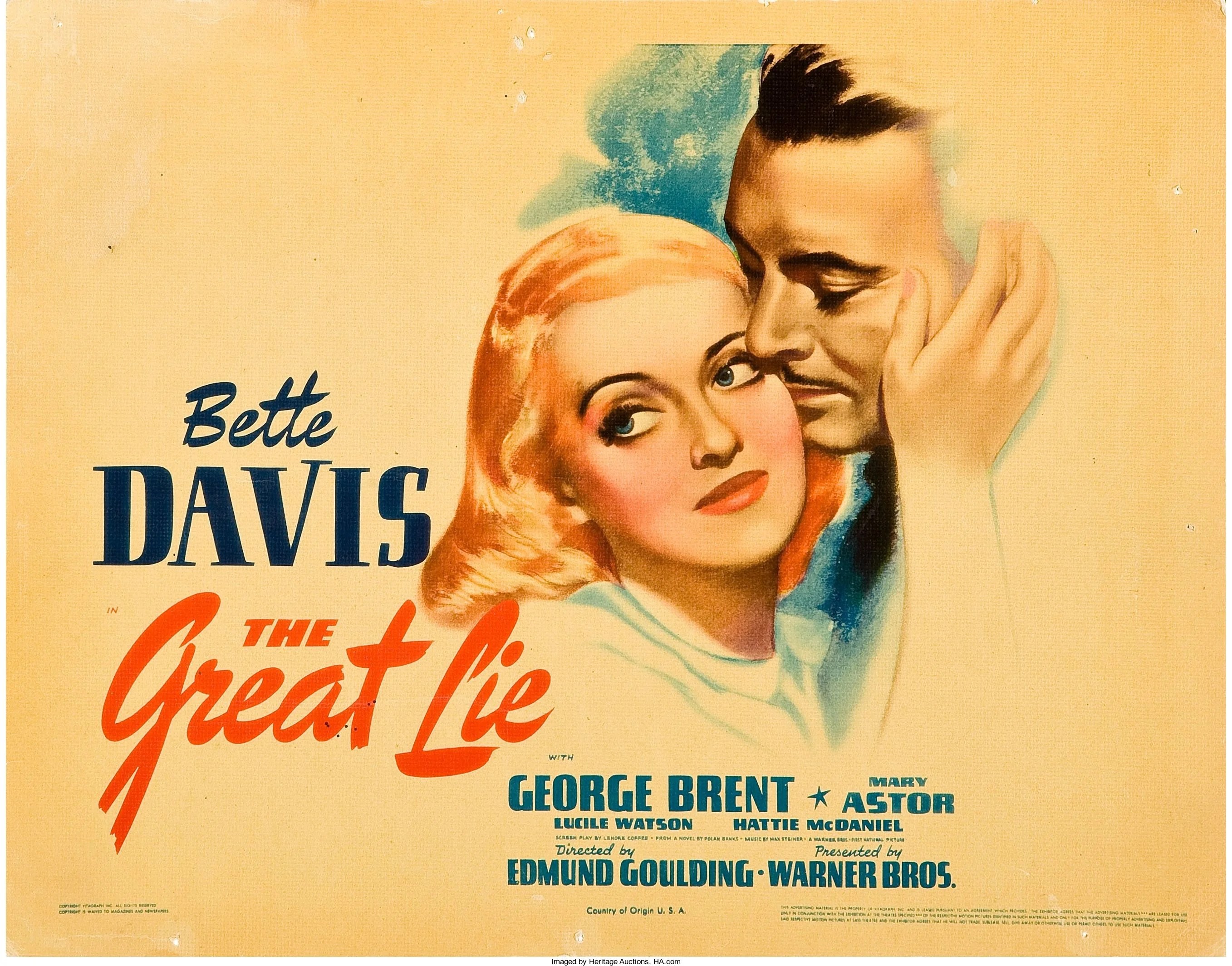
1941 brought a soap opera along that cast Mary Astor as Bette’s competition for the affections of Mr. Brent. A marriage that isn’t valid, a return to his old flame and a child that might hold him hostage to one of these ladies. This one is the lone title on this list of Davis/Brent duets that I’ve yet to see. It’s here on the shelf so I guess I’ll have to press play at some point and complete the catalogue.
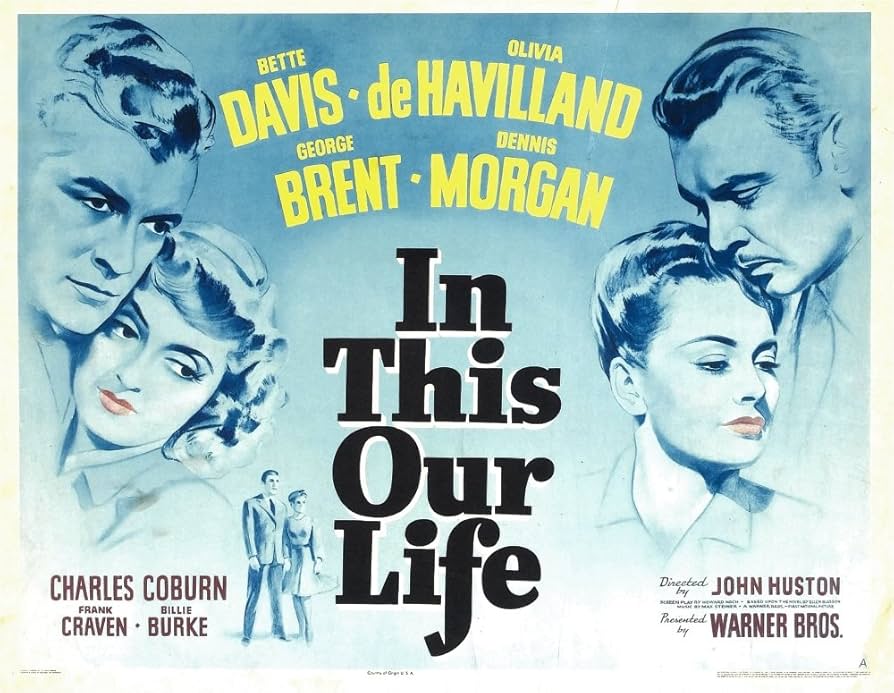
1942 brought their final go around. It’s a memorable, heavy handed drama from John Huston who was coming off his debut effort, The Maltese Falcon and features a top tier cast. Bette plays it psychotic while Olivia de Havilland plays it nice. Brent is the beau caught in the middle along with Denis Morgan and even old codger, Charles Coburn. An actor who never fails to steal darn near every scene he’s in. The addition of Billie Burke and Hattie McDaniel only strengthen the whole sordid affair.
Davis of course continued to chase the Hollywood dream and stayed on camera right up to her death in 1989 with plenty of classics along the way and career highs and lows. Brent slowed down once Warner Bros cut him loose and when the 1950’s rolled around he found sporadic work in the new medium known as TV and some low budget B flicks like F.B.I. Girl and Man Bait. The latter filmed overseas for Hammer Films prior to that studios rise thanks to horror and fantasy films. Reading the biography of Brent I learned he had an increasing interest as an investor/owner in horse racing. Aside from a brief cameo in 1978’s Born Again as a favor to old time director Irving Rapper, Brent’s acting career had come to an end in 1960. It’s unfortunate that a producer hadn’t thought to put him opposite Bette in one of her many 1950’s efforts. Seems like a missed opportunity for the advertising department.
Bette Davis 1908-1989 and George Brent 1904-1979.

 Mike's Take On the Movies
great post, Mike. Hadn’t realised they had made quite so many movies together – many of which I have yet to see.
I guess George was always Mr Reliable.
Thanks, kind of jumped out at me while reading this bio on Brent. Seems unfair but for me he was always under the radar despite being a leading man of that era.
You don’t read a lot about George Brent, and I guess that’s understandable given how far away we are from his heyday and the fact that he never came across as the most exciting screen presence. However, I think he could be a very effective lead given the right role. He was arguable overshadowed by Davis in many (most?) of their movies together, but that could be applied to a lot of her co-stars.
I thought he was exceptionally good with Stanwyck in My Reputation. I also liked his work in Experiment Perilous and how he played against type in The Spiral Staircase.
Yes it was hard to get the best of Bette on screen for sure no matter who was playing lead. I’ve yet to see Reputation so should rectify that. Staircase is a classic of the gothic genre/era for sure.